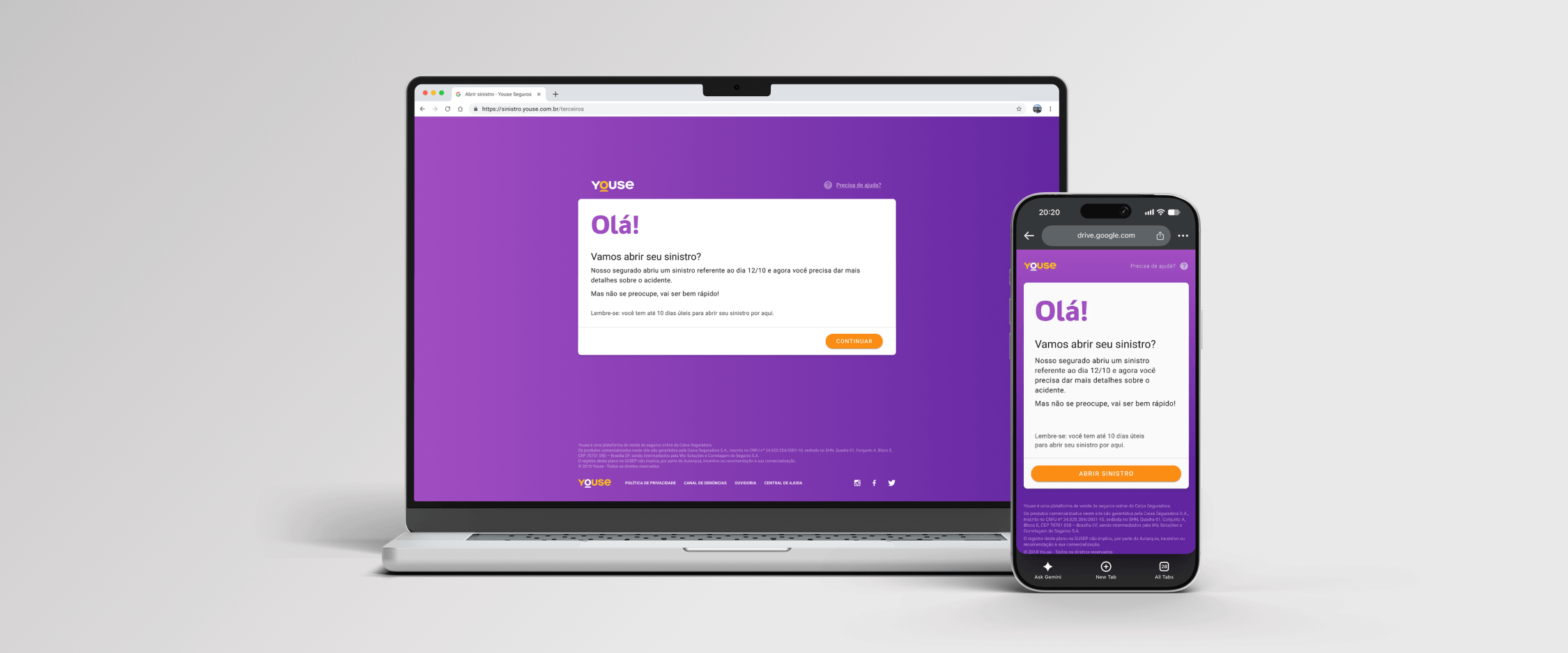
Case study
Third-party Claims
Youse Seguros | UI Design, UX Design, User Research, Usability Testing
Youse, is a Brazilian digital insurance company offering customizable car, home, and life insurance policies online, and one of the first to introduce peer-to-peer insurance in Brazil.
As a founding product designer, I helped shape the entire buyer experience and worked on the user experience for claim analysis, third-party claims, and car inspections. Back in 2019, I joined the Claim Squad and became responsible for the end-to-end experience of Youse's claims ecosystem.
Problem
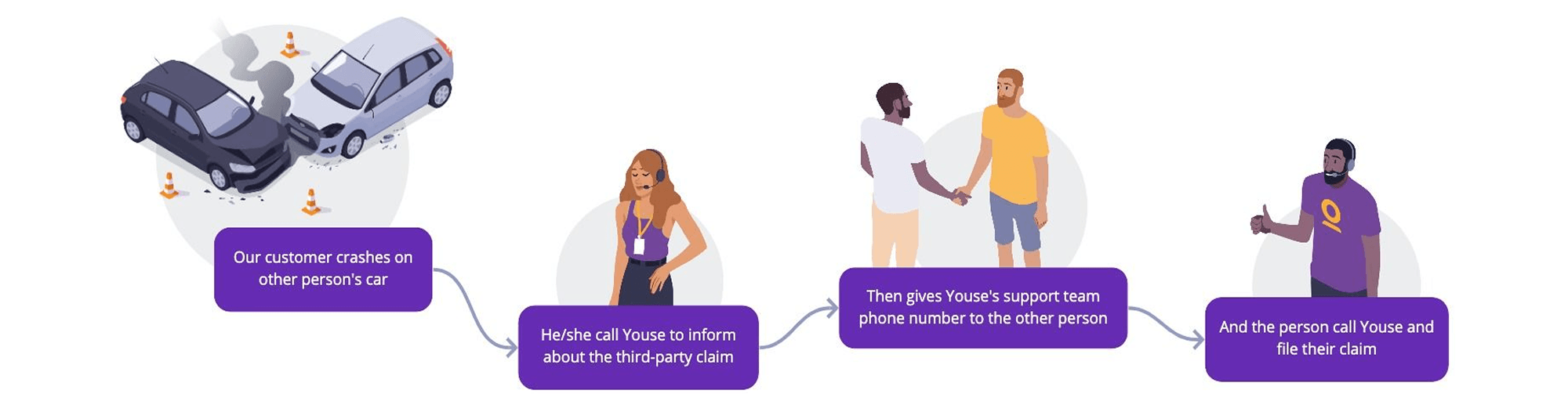
It was already possible for a Youse customer to file a claim in the app, but not for the third party, the other driver involved in the accident. To formalize their side of it, a third party had no option but to call Youse's support line and go through the whole process over the phone.
That call volume was a growing source of support tickets and operational cost, at odds with Youse's core strategy of being a digital-first insurer.
Understanding
Claim Data
Third-party claims were the second most common claim type, right behind collision, representing 23% of all claims filed in a 12-month period.
Third parties still had to call our support team to file a claim, and that call volume was driving a growing number of support tickets and operational cost.
9,877
Total claims
Over a 12-month period.
23%
Third-party claim
2nd most common claim type.
Previous research findings
- Customers are in a stressful situation, so waiting too long to talk with someone on the phone is very frustrating.
- Many times the third parties don't trust our customers, feeling that they won't have any support and will be left with their car damaged.
- Customers don't want to be bothered by third parties, so they don't find it safe to give their personal phone numbers.
- Customers want to know if the third parties had full support from Youse and if the service was done, so they can just forget about the incident.
Opportunities
To file a claim for third-party, our customers still needed to call our support team.
Youse had an increasing number of support tickets and operational cost for third-party claims.
Strategy & Goals
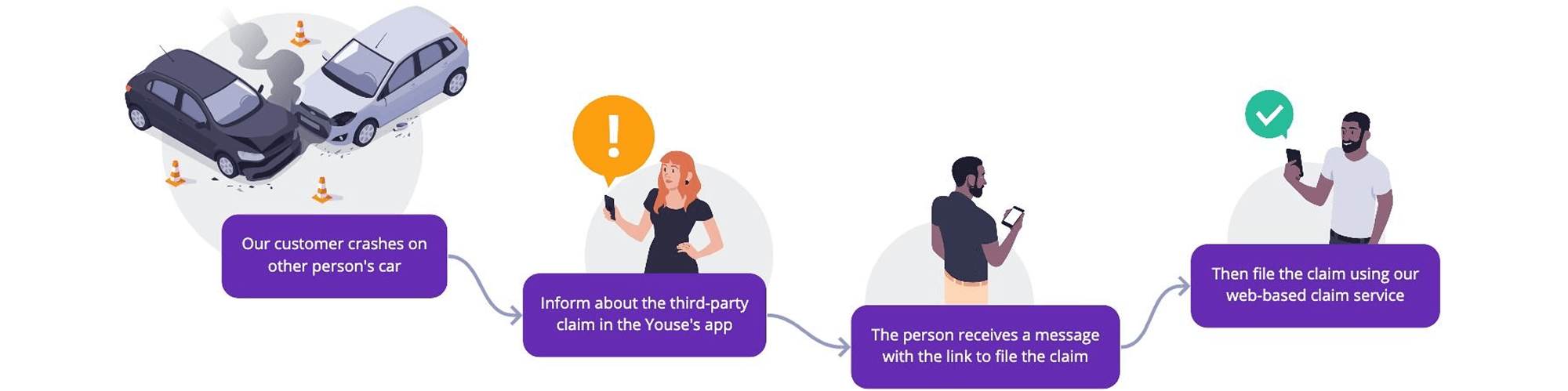
Give the possibility to customers to inform a third-party accident in the app, and a web-based experience for the third parties to file the claim.
The existing third-party claim experience was far from what Youse desired to offer to its customers and other people involved. We wanted to make it easier and offer a digital self-service experience. It was already possible to file a claim using the app, but not yet for the third-party coverage.
Solution
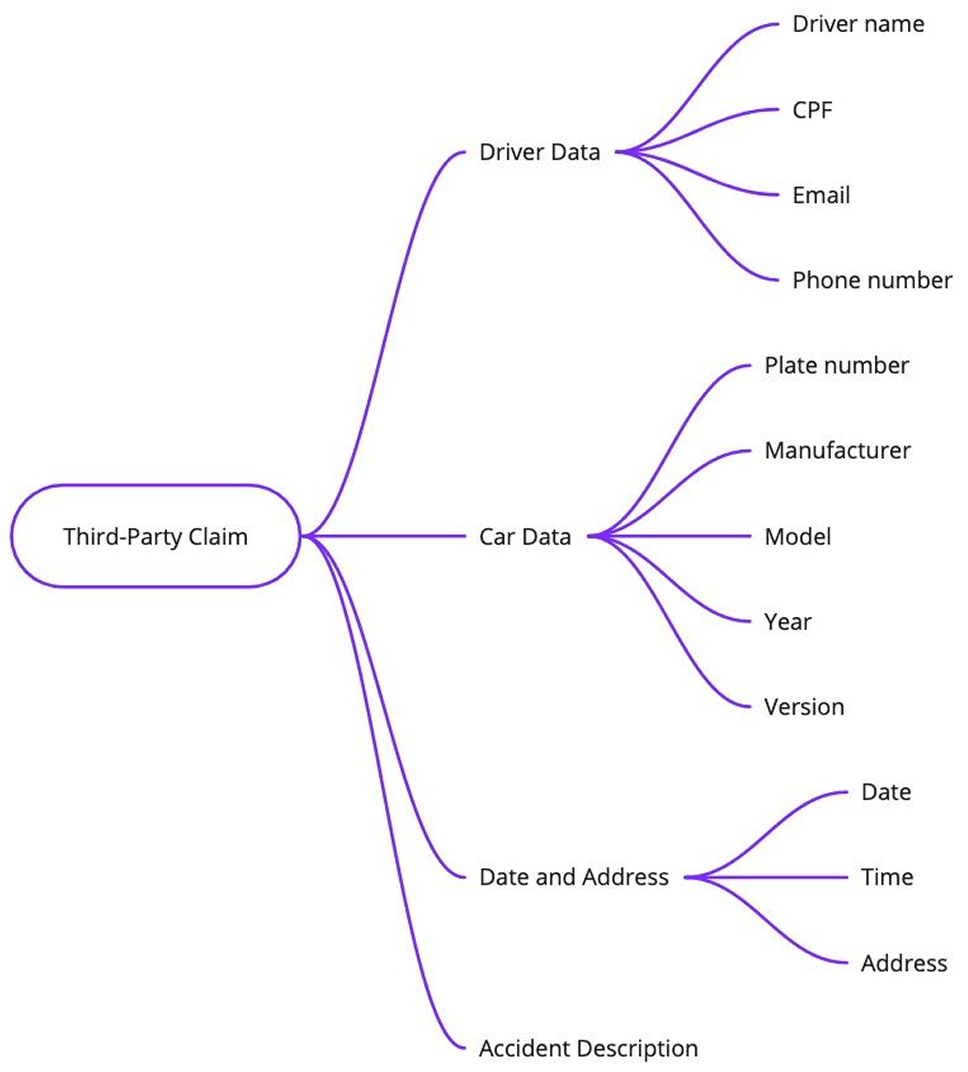
Content Mapping
I mapped all the information the Claim Service and our operational team needed to file a claim, breaking it down into driver data, car data, date and address, and a description of what happened. That mapping let me work out which fields the third party could realistically provide themselves, so the flow could collect as much as possible upfront and leave less for someone to chase down later.
Interactive Prototype
Loading prototype
Insights
Interview & Usability Test
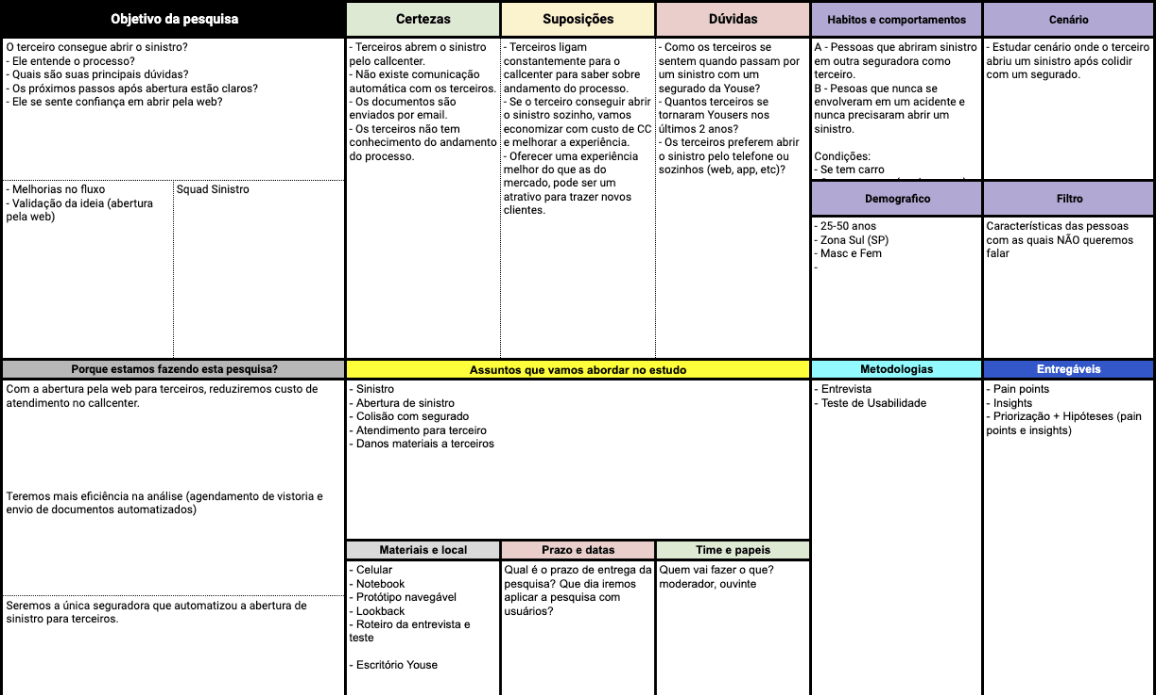
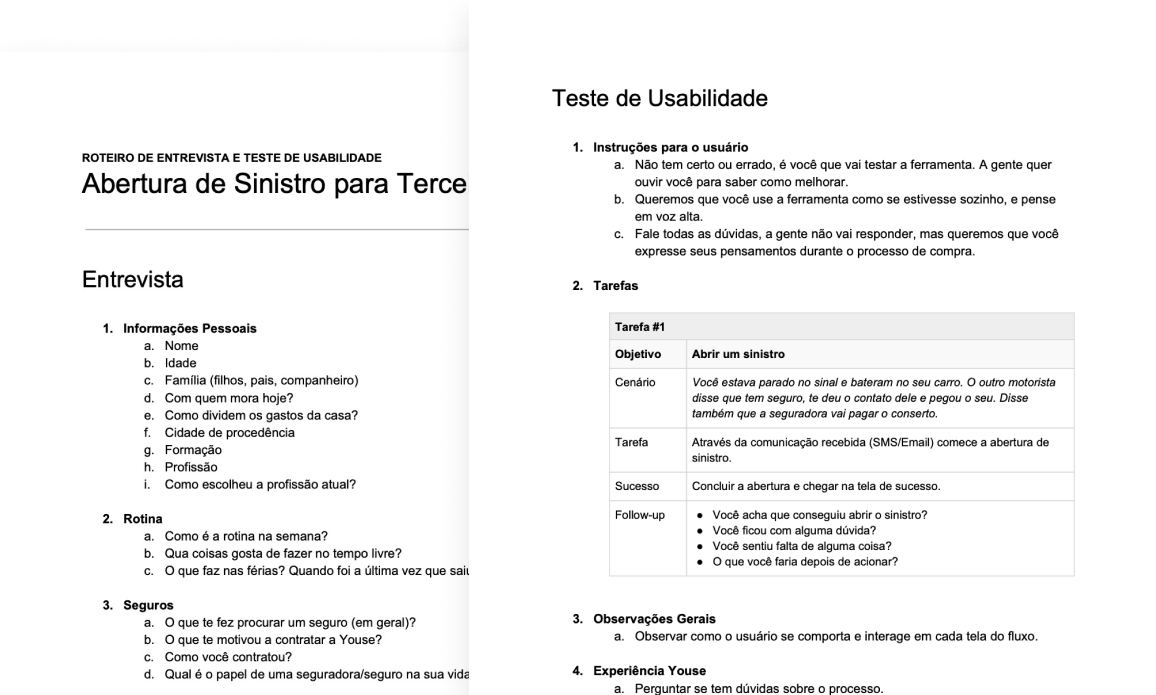
After the final design review with the team, I set up a usability test using the prototype to validate if it was usable and understandable by our users.
I built a research plan to support our research planning, ensure we had a clear goal, and make sure we could answer the following questions:
What do we wanted to know?
- How was the user's experience as a third-party in a claim process?
- What's the user's perception about using our web-based process to file a claim?
Interview Findings
Anguish
They don't know what the process is like.
Frustration
File a claim without being guilty of the accident.
Anxiety
They don't know whether they will be paid or have their car repaired.
Mistrust
They do not feel that the police, the insurer, the dispatcher want to help.

It was very time consuming, very exhausting. I was once the victim and was going through all this disorder to receive something that was my right.
Usability Test
Step 1: Driver and car information
It wasn't clear to the users, the third parties, whether the information requested was about them or about the insured person.
Step 2: Date and address
The person doesn't always know the zip code of the place where the accident happened, so the map helped to find the location without breaking the experience.
Success screen: Claim filed
It wasn't clear to users what would happen next. Most said they'd still call support to find out, and some took a screenshot of the confirmation just to keep a record.
Impact
Within the first four weeks after launch, 40% of third-party claims were filed through the new digital self-service journey instead of by phone.
Support ticket volume and operational cost for third-party claims dropped as a direct result of removing the phone call requirement, though we didn't track those two as a hard percentage.
40%
Third-party claims filed online
Files and Prototypes
More work
Case study
Loft App
Loft had no mobile app, only a slow, high-bounce mobile site. As founding product designer, I led the app from MVP to a personalized native experience, raising lead-to-schedule conversion 16% and ranking top 10 in its App Store category.
Loft | UI Design, UX Design, User Research, Product Strategy
Case study
Contract Template Management
Contract templates lived in hand-coded HTML, taking engineers weeks to update and leaving one attachment type editable with no audit trail. I designed a system giving the legal team direct control, closing a compliance risk ahead of the company's IPO.
QuintoAndar | UI Design, Systems Thinking, Product Strategy, Stakeholder Management
Article
Building a Skill for Communications Visibility
QuintoAndar's messaging system had grown to 500+ rules and 2,500+ templates with no unified view of what a customer actually received. I built an AI agent skill that maps any communication journey on demand, no ticket to engineering needed.
QuintoAndar | AI Tooling, Internal Tools, Workflow Automation